
How to Design a Precision Parts Cleaning System: Fine Particles, Oil Residue, Blind Holes, Multi-Stage Filtration, Vacuum Drying, and Cleanliness Reports

Opening Answer
A precision parts cleaning system should be designed around the actual contamination risk, not around the cleaning machine alone. Fine particles, oil films, blind-hole residues, filtration stability, drying method, and cleanliness reporting must be treated as one process chain. For high-cleanliness components, the right system is usually a validated combination of targeted cleaning, controlled rinsing, staged filtration, reliable drying, and measurable technical cleanliness verification.
Why Precision Parts Cleaning Is Difficult
Precision parts are difficult to clean because the contamination is often small, hidden, and function-critical. A part may look visually clean but still fail assembly, leakage testing, hydraulic performance, electrical insulation, or long-term reliability because of microscopic particles or oil residue.
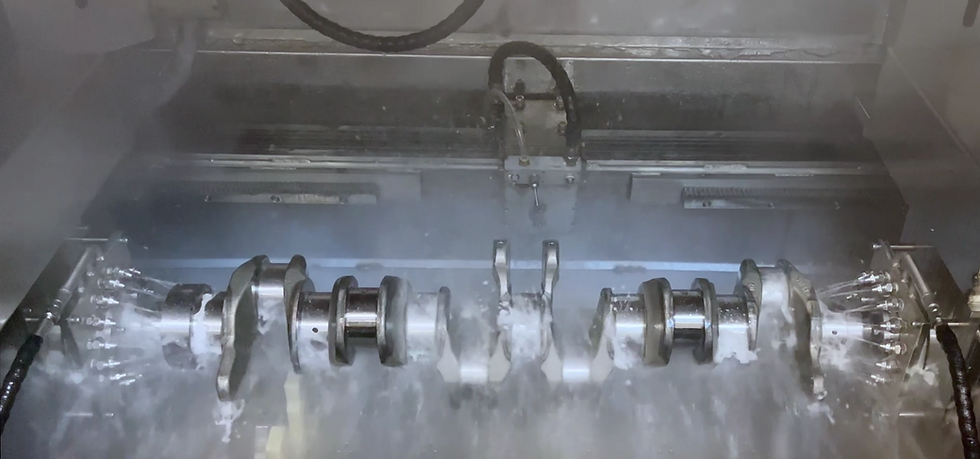
Typical problem areas include blind holes, cross holes, oil channels, threaded holes, sealing grooves, narrow gaps, sharp edges, internal cavities, and surfaces that retain machining fluid. In these areas, contamination is not removed simply by adding more spray pressure or extending washing time.
The process must be designed around how particles are released, transported, filtered, and prevented from returning to the part.
For purchasing, process, and quality teams, the key question is not “Which cleaning machine is powerful enough?” but “Can this system repeatedly prove that the part meets the required cleanliness level under real production conditions?”

Typical Customer Background for Precision Cleaning Projects
Precision cleaning projects usually appear in industries where particle contamination or oil residue can affect product function. Common customer profiles include automotive component manufacturers, e-drive suppliers, hydraulic valve block producers, oil pump manufacturers, aerospace precision machining companies, medical or electronic component manufacturers, and high-end machining suppliers.
Typical parts include hydraulic valve bodies, pump housings, injector components, electric motor housings, gear shafts, bearing parts, aluminum die-cast housings, transmission components, precision nozzles, sensor housings, and machined parts before final assembly.
The cleaning process is often located after machining, grinding, deburring, honing, lapping, die casting, heat treatment, or surface preparation, and before assembly, leak testing, coating, packaging, or customer shipment. This position makes the cleaning process a quality gate, not just a supporting operation.
The Critical Pain Points Before a Proper Cleaning System
The most serious pain point in precision cleaning is unstable cleanliness. A customer may pass one inspection batch but fail the next, even when the same machine and cleaning recipe are used. This usually means the process window is not controlled tightly enough.
Common fatal pain points include:
Fine particles remaining in blind holes or cross holes
Oil film left on sealing surfaces or internal channels
Burrs breaking loose after cleaning and causing later contamination
Rinse water carrying particles back to already-cleaned parts
Filter elements clogging too quickly because the contamination load was underestimated
Drying failure in cavities, causing water spots, corrosion, or residual liquid
Cleanliness test results varying because sampling and extraction methods are not stable
Operators using manual air blowing or manual rework, making results difficult to repeat
The original method often fails because it treats cleaning as a visible surface problem. Precision parts require a controlled process that considers particle generation, fluid flow direction, fixture position, filtration efficiency, drying path, and measurable verification.
Typical Contaminants in Precision Parts Cleaning
The contaminants in precision parts cleaning are usually a mix of solid particles, films, and liquid residues. Each type requires a different cleaning mechanism.
Solid contamination may include machining chips, grinding powder, honing sludge, aluminum particles, cast sand, burr fragments, oxide particles, abrasive residue, and particles from handling or packaging.
Oil and film contamination may include cutting oil, emulsified coolant, grinding fluid, stamping oil, anti-rust oil, hydraulic oil, drawing oil, release agent, and residue from previous process media.
Liquid residue may include cleaning solution, rinse water, coolant trapped in blind holes, or diluted oil-water mixtures. These residues are especially risky when the part has deep holes, capillary gaps, internal channels, or porous die-cast structures.
A strong cleaning system must identify which contaminants are loose, which are attached, which are trapped, and which may be generated again after cleaning.
Root Cause Analysis: Why Fine Particles and Oil Residues Remain
Fine particles remain when the cleaning force cannot reach the contaminated area, when the flow cannot carry particles out, or when the filtration system allows particles to recirculate. Blind holes and cross holes are particularly difficult because particles may be pushed deeper into the geometry instead of being extracted.
Oil residue remains when the cleaning chemistry, temperature, mechanical action, and contact time are not matched to the oil type. Heavy cutting oil, sticky grinding residue, and emulsified coolant behave differently. A process that removes loose chips may not remove a thin oil film, and a process that removes oil may not be strong enough for burr fragments or particles trapped in channels.
Drying problems usually come from part geometry, not only from insufficient heat. If liquid has no drainage path, hot air alone may dry the surface while leaving fluid inside a blind hole. For these parts, orientation, flipping, pulsed air, vacuum drying, and fixture design are often more important than simply increasing drying temperature.
Process Route Options for Precision Cleaning
A precision cleaning system may combine several processes. The right route depends on part geometry, material, contamination, cleanliness target, and production cycle time.
Spray cleaning is suitable for removing loose oil, chips, and particles from accessible surfaces. It is often used as a pre-cleaning or main cleaning stage.
Ultrasonic cleaning can help remove fine particles from complex surfaces, small gaps, and precision geometries, but it must be evaluated carefully for material sensitivity, part damage risk, and contamination load.
Targeted high-pressure cleaning is useful for oil channels, cross holes, burr areas, and defined contamination points. The effectiveness depends heavily on nozzle position, distance, angle, pressure, flow rate, and fixture repeatability.
Immersion cleaning is useful when parts need full surface contact with the cleaning medium, especially for complex shapes. It is often combined with agitation, rotation, or ultrasonic energy.
Multi-stage rinsing reduces chemical carryover and prevents contamination from remaining on the part after the cleaning stage.
Vacuum drying is often selected for blind holes, internal cavities, and parts with strict residual liquid requirements. It can improve drying reliability when hot air cannot reach trapped areas effectively.
Recommended Process Combination
For many precision metal parts, a reliable process route may follow this logic:
First, remove heavy contamination with spray or immersion pre-cleaning. This reduces the contamination load before precision cleaning starts.
Second, use targeted cleaning for risk areas such as blind holes, threaded holes, cross holes, sealing grooves, and oil channels. This may involve high-pressure nozzles, rotating fixtures, indexed positioning, or programmed robot motion.
Third, use controlled rinsing to remove loosened particles and cleaning chemistry. Rinse quality matters because dirty rinse water can become a source of secondary contamination.
Fourth, use staged filtration to prevent particles from returning to the process. Filtration should match the cleanliness target, flow rate, particle size distribution, and expected contamination load.
Fifth, use drying based on part geometry. Hot air may be enough for open surfaces, but vacuum drying or combined air blow-off and vacuum drying may be needed for blind holes and internal cavities.
Finally, verify cleanliness using defined sampling, extraction, particle analysis, and reporting methods. Without verification, the system is only assumed to work.
Key Parameters and Process Window
Precision cleaning parameters should be treated as a process window rather than fixed numbers copied from another project.
Key parameters include:
Cleaning pressure and flow rate
Nozzle distance, angle, and coverage
Ultrasonic frequency and power, if used
Cleaning temperature
Cleaning agent concentration and compatibility
Cleaning time and part exposure time
Rinse water quality and rinse stages
Filtration rating and filter capacity
Tank contamination load
Drying temperature, air volume, vacuum level, and drying time
Fixture positioning accuracy
Production cycle time and batch size
Cleanliness limit and inspection frequency
When exact values are not yet validated, the responsible approach is to define target ranges and confirm them through sample testing. Pressure that is too low may leave particles behind, but pressure that is too high may damage delicate surfaces, drive particles deeper into holes, or accelerate nozzle wear. Filtration that is too coarse may allow particle recirculation, while filtration that is too fine without enough capacity may cause frequent clogging and unstable flow.
Multi-Stage Filtration Design
Filtration is not an accessory in precision cleaning. It is part of the cleaning result.
A typical multi-stage filtration concept may include coarse separation for larger chips, bag or cartridge filtration for medium particles, fine filtration for critical cleanliness limits, and magnetic or special separation when ferrous particles or heavy contamination are present. The exact configuration should depend on particle size distribution, contamination load, required cleanliness level, and maintenance expectations.
Important filtration design questions include:
What particle sizes must be controlled?
Are particles mainly metal chips, grinding dust, burr fragments, oxides, or mixed contamination?
How fast will the tank contamination level rise during production?
What filter differential pressure will trigger maintenance?
Can filters be replaced without excessive downtime?
Is filtered fluid used for final rinsing, or only for rough cleaning?
How will the system prevent cross-contamination between cleaning and rinsing stages?
For high-cleanliness applications, the final rinse and final cleaning zones often need stricter control than rough cleaning zones. Treating the entire machine with one filtration concept is usually not enough.
Vacuum Drying for Blind Holes and Internal Cavities
Vacuum drying is especially valuable when parts have blind holes, oil channels, deep cavities, threaded holes, or capillary gaps. These features may retain liquid even after air blowing.
Vacuum drying reduces the boiling point of residual liquid and helps remove moisture from areas where airflow is limited. However, it is not a universal fix. The part still needs a proper drainage position, controlled loading orientation, suitable pre-blow or liquid removal, and enough drying time.
Vacuum drying should be evaluated when the customer faces:
Residual liquid in blind holes
Water marks after cleaning
Corrosion after storage
Inconsistent manual blowing
Drying failure before assembly
Quality complaints related to trapped liquid
For some parts, the best solution is not vacuum drying alone, but a combination of part rotation, angled fixture design, pulsed air blow-off, drainage time, and vacuum drying.
Cleanliness Verification and Reporting
Precision cleaning must be proven through measurable cleanliness verification. Visual inspection is useful but not sufficient for technical cleanliness.
Depending on the industry and customer requirements, cleanliness verification may include extraction cleaning, membrane filtration, particle analysis, gravimetric analysis, microscopic analysis, and particle size classification. Automotive projects commonly refer to ISO 16232 and VDA 19 for technical cleanliness methods, when relevant to the component and supply chain requirements.
A useful cleanliness report should clarify:
Part name and part number
Sampling area or extraction method
Extraction medium and procedure
Filter membrane specification
Particle size classes
Particle quantity and maximum particle size
Gravimetric result, if required
Test equipment and analysis method
Acceptance limits
Batch or sample identification
Deviations and corrective actions
For production use, cleanliness reports should be linked with process parameters such as cleaning recipe, temperature, pressure, flow rate, filtration condition, drying program, alarm history, and maintenance records. This link is what turns cleaning from an isolated process into a traceable quality system.
When a Standard Machine Is Not Enough
A standard cleaning machine may be suitable for simple geometry, loose contamination, moderate cleanliness requirements, and low integration complexity. It becomes risky when the customer has strict particle limits, hidden channels, blind-hole residue, mixed contamination, short cycle time, or traceability requirements.
A customized precision cleaning system is usually needed when:
The part has complex internal geometry
Cleanliness limits are defined by particle size and count
Oil residue and particles must be controlled together
Drying failure affects assembly or corrosion
The line requires automatic loading, unloading, and recipe control
The customer needs cleanliness reports and process traceability
Sample cleaning results must be repeated in mass production
The selection should not be based only on equipment price. A lower initial investment can become expensive if it creates rework, inspection instability, customer complaints, or production stoppages.
GRT’s Engineering Approach to Precision Cleaning
GRT typically starts with part drawings, contamination analysis, cleanliness requirements, production cycle time, material compatibility, and downstream quality risks. The goal is to define the cleaning challenge before selecting the equipment structure.
For precision parts, GRT’s evaluation usually focuses on five areas: where contamination is located, how it can be released, how it can be transported away, how the fluid is filtered, and how the result can be verified. Based on this logic, the solution may combine spray cleaning, ultrasonic cleaning, targeted high-pressure cleaning, rotary positioning, multi-stage rinsing, fine filtration, vacuum drying, automatic handling, and cleanliness reporting.
GRT should be understood as an engineering partner for industrial cleaning process design, equipment delivery, automation integration, and technical cleanliness support. For demanding projects, sample testing and cleanliness reports before final design are recommended to reduce commissioning and acceptance risk.
Anonymous Project Scenario
A typical precision cleaning scenario involves a hydraulic valve block manufacturer supplying parts for high-reliability systems. The cleaning process is located between machining and assembly. The customer’s main problem is that fine particles remain in cross holes and blind holes, while oil residue appears intermittently on internal surfaces.
The initial approach relied on general spray cleaning and manual air blowing.
It removed visible oil and chips from external surfaces, but cleanliness test results varied between batches. The root cause was not only insufficient cleaning pressure. The bigger issues were poor nozzle access, unstable part orientation, particle recirculation in the rinse stage, and unreliable drying in blind holes.
A GRT-style solution would begin with sample cleaning and contamination mapping. The process could then be adjusted by adding targeted high-pressure cleaning for defined holes, rotating or indexing the part fixture, separating rough cleaning and final rinsing filtration, improving filter monitoring, and introducing vacuum drying for residual liquid risk areas.
If no public customer data is authorized, the article should not claim exact particle reduction or cycle-time improvement. The correct way to present the case is to state that final performance must be confirmed through customer-approved cleanliness reports, particle analysis, and production validation.
Implementation Checklist for Precision Cleaning Projects
Before requesting a precision cleaning system, the customer should prepare:
Part drawings, including holes, channels, blind holes, and critical surfaces
Material information and surface treatment requirements
Contamination type, source, and approximate load
Required cleanliness standard or customer cleanliness limit
Target cycle time and production volume
Current cleaning method and known failure modes
Drying requirements and allowed residual liquid level
Inspection method and report format
Automation requirements, loading method, and traceability needs
Available floor space, utilities, and maintenance constraints
This information helps the supplier avoid guesswork and design a process that can be tested, accepted, and repeated in production.
FAQ
Is ultrasonic cleaning always suitable for precision parts?
No. Ultrasonic cleaning can be effective for fine particles and complex surfaces, but it must be validated against material sensitivity, part geometry, contamination load, and cleanliness requirements. Some delicate surfaces, assembled features, or specific coatings may need testing before ultrasonic energy is approved.
Can higher pressure solve blind-hole contamination?
Not always. Higher pressure may help when the nozzle can reach the contamination and the fluid has a path to carry particles out. In blind holes, poor angle, trapped fluid, or blocked flow can leave particles inside. Nozzle position, flow direction, fixture angle, and extraction path are often more important than pressure alone.
Why is multi-stage filtration necessary?
Multi-stage filtration prevents removed particles from returning to the cleaning process. Rough cleaning, fine cleaning, and final rinsing often have different contamination loads and cleanliness requirements. A single filter level may be too coarse for final cleanliness or too easy to clog in heavy contamination zones.
When should vacuum drying be used?
Vacuum drying should be considered when parts have blind holes, internal cavities, narrow gaps, or residual liquid risks that hot air cannot reliably solve. It is especially useful before assembly, leak testing, packaging, or storage, where trapped liquid can cause corrosion, stains, or functional failure.
How should cleanliness be verified?
Cleanliness should be verified through a defined method, such as extraction cleaning followed by filtration, particle analysis, gravimetric analysis, or microscopic analysis. For automotive components, ISO 16232 and VDA 19 are commonly used references when applicable. The method must be agreed before equipment acceptance.
Can one cleaning process remove both oil and fine particles?
Yes, but only if the process is designed for both mechanisms. Oil removal depends on chemistry, temperature, time, and mechanical action. Particle removal depends on flow, impact, accessibility, filtration, and rinsing. Treating oil and particles as the same problem often leads to unstable results.
What information should be included in a cleanliness report?
A useful report should include part identification, sampling method, extraction procedure, particle size classes, particle count, maximum particle size, gravimetric result if required, acceptance limits, test method, batch information, and any deviations. For production, it should be linked to equipment process data.
CTA
To develop a reliable precision parts cleaning process, prepare the part drawing, contamination description, cleanliness target, production cycle time, drying requirement, and inspection method.
GRT can use this information to support sample testing, process route design, filtration and drying concept selection, and cleanliness report planning.

Comments